 Nearly every history book we've been taught has a line loosely formed somewhat like this: “India is a vast land of diversity” or “India is a perfect example of 'Unity in Diversity'”.
Of course, growing up, we've always assumed that these lines are meant to talk about our vast treasures of culture, and just how beautifully different we all are- bound together in solidarity with the nation. That is the truth, yes, but there is another different layer buried underneath- one that not many manage to notice. It is not just the people of the country, but also, its very states that are diverse entities in themselves.
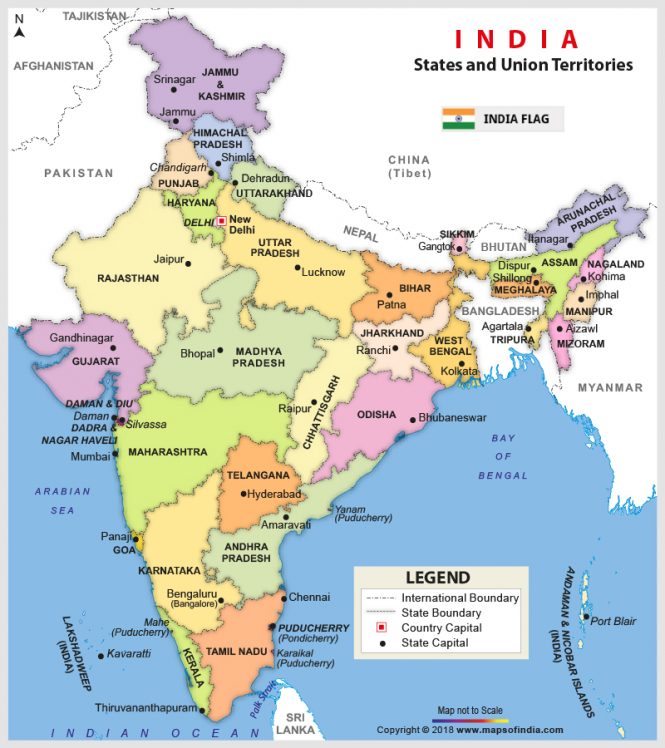
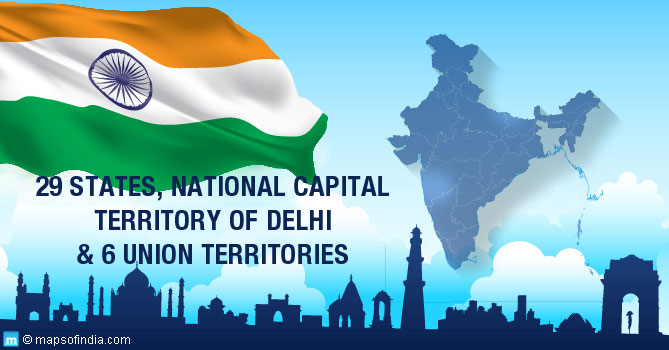
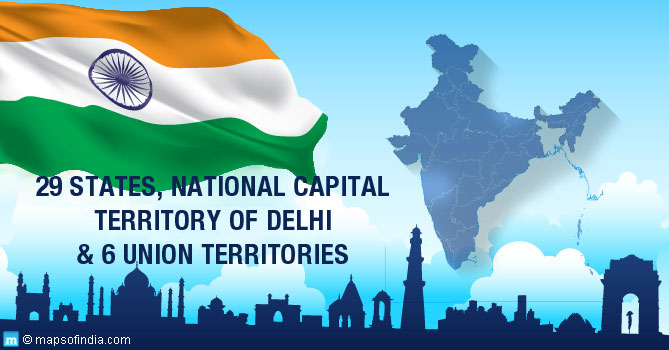
Ever wondered why we have exactly 29 number of states? Has that always been the case? No. Then, how did we reach here? Let's find out. The history of India: a journey through 29 states.
Nearly every history book we've been taught has a line loosely formed somewhat like this: “India is a vast land of diversity” or “India is a perfect example of 'Unity in Diversity'”.
Of course, growing up, we've always assumed that these lines are meant to talk about our vast treasures of culture, and just how beautifully different we all are- bound together in solidarity with the nation. That is the truth, yes, but there is another different layer buried underneath- one that not many manage to notice. It is not just the people of the country, but also, its very states that are diverse entities in themselves.
Ever wondered why we have exactly 29 number of states? Has that always been the case? No. Then, how did we reach here? Let's find out. The history of India: a journey through 29 states.
1947: India won its Independence from British rule
At the time of independence, India comprised of more than 500 provinces and princely states. With independence also came partition. Under the British supervision, several Indian provinces were divided. Bengal was one of the most crucial provinces to be divided- 'sliced' into two. Eastern Bengal became East Pakistan, while Western Bengal remained within the Indian territory. On the West, Punjab was divided into East Punjab and West Punjab. West Punjab was given to newly-formed Pakistan, eastern Punjab stayed with India. Bombay province was divided into two- Bombay and Sind province. The latter became a part of Pakistan, the former retained in India. Central provinces and Berar were merged to form the province of Madhya Pradesh, while United Provinces was formed by merging Rampur, Banaras, and Tehri Garhwal. The boundary line dividing Bengal and Punjab provinces between India and Pakistan is known as the Radcliffe line.The dispute of Jammu & Kashmir
Shortly after the partition, some Pakistani soldiers disguised as Razzakars invaded Jammu and Kashmir in October 1947, attempting to annex Kashmir. However, they were forced to retreat upon being intercepted by the Indian Army at Patan. Meanwhile, the existing monarch signed an Instrument of Accession with India, officially becoming a part of the Indian Union. The areas held by Pakistan remained under their control, known as Pakistan occupied Kashmir today- a disputed territory. By November 1947, Junagadh and Manavadar, two states that had initially acceded to be part of newly formed Pakistan, were successfully annexed by India. By 1950, most states were part of the Indian Union, and the reorganization of states was completed by 1956. Timeline of the formation of 29 Indian states, National Capital Territory of Delhi and 6 Union Territories