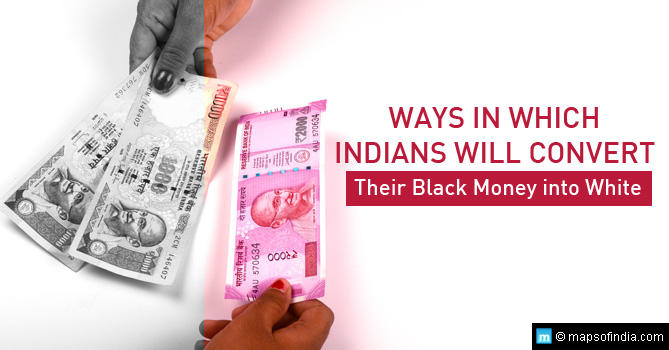
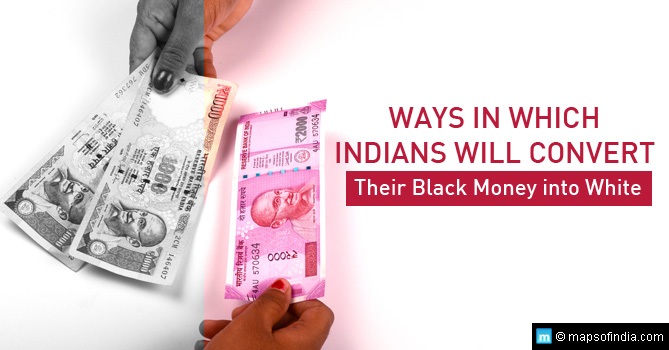
 Black money in layman terms is money earned by an individual in the black market, on which taxes have not been paid and is thus, illegal. While some reports claim that there is a total of US$1.06 trillion held illegally in the Swiss banks, the actual amount of black money deposited in foreign banks is still unknown. In a bid to curb the creation and flow of black money into the Indian economy, Prime Minister Narendra Modi demonetised Rs 500 and Rs 1000 notes from midnight of November 8, 2016. While experts feel that this is indeed a masterstroke by Modi, and will help stem the creation of black money, only 6 percent of the black money in India is held in cash. Those holding it will still find ingenious ways to launder their money in the 50-day window that the government has provided, before the existing series of Rs 500 and Rs 1,000 notes are completely purged from the system. While there have been no reports of the rich with black money committing suicide or dying of heart attack after the notes ban, it is the poor and middle class citizens who are most inconvenienced. They are struggling with the difficulty caused by the move. Three people have collapsed and died in the last 4 days after standing in long queues at the bank and ATM, waiting to draw money. Separately, a death has been reported at Pali, Rajasthan of a 1-year old child, because the ambulance refused to take Rs 500 denomination. The Google Search Engine is wrought with the question, "How to convert black money into white". And the sad part is the black money holders will surely find ways and means to convert it into white. Here are a few ways that the Government should be on the lookout for, which will be used to turn black money into legal, white money:
-
The Agricultural Sector
-
The Money Mules
-
Loans to the Poor Without Interest
-
Trust and Charity
-
Income From a Profession
-
Use of Jewellers
-
Donations to Political Parties and Temples