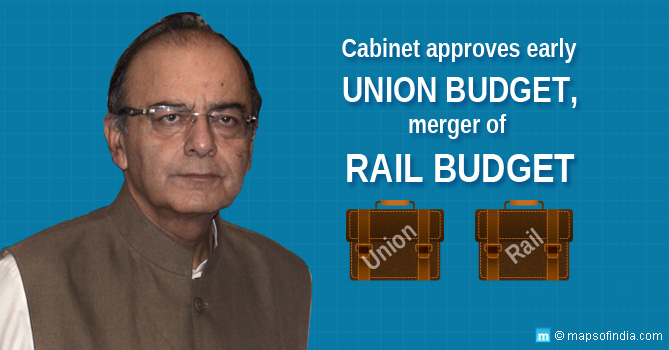
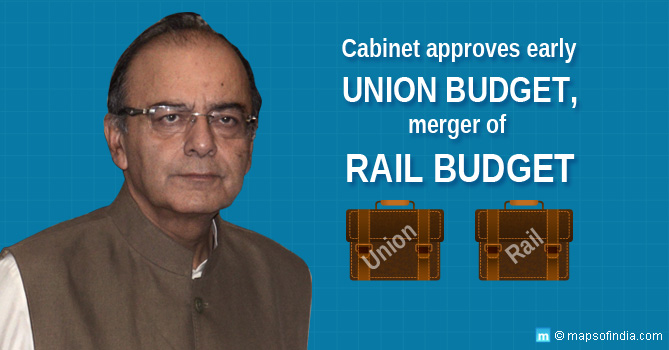
 In what can be seen as doing away with a practice that has been in vogue since the colonial era (92 years to be precise), Indian Government has opted to merge union and railway budgets. This also means that from now on there is no need to have different Votes on Account, and Appropriation Bills and this will save plenty of time as well. Incidentally, this is one reform that a lot of experts had been calling for in the last few years.
R Jagannathan, a columnist for Firstpost and Editorial Director of Swarajya, had written in 2014 that the railway budget was just another component like civil aviation and defence budgets, and hence it did not really merit a separate day. According to Jagannathan, it was all about presenting some accounts to the government and there was no need to hype a public undertaking budget that involved accounting, annual reporting, and budgeting like any other privately-owned enterprise.
In fact, several committees had also asked for this for a long time now, stating how instead of serving any purpose it just politicized the entire process. No fare was ever increased and it only served to operate as a patronizing body. A committee led by Bibek Debroy, a member of Niti Aayog, had termed it to be a ritual that was becoming less important compared to the union budget. He had, however, asked for a gradual phasing out in his report on restructuring of railways. British had introduced this policy in 1924 because of the sheer size of railways vis-à-vis Indian economy at that time.
In what can be seen as doing away with a practice that has been in vogue since the colonial era (92 years to be precise), Indian Government has opted to merge union and railway budgets. This also means that from now on there is no need to have different Votes on Account, and Appropriation Bills and this will save plenty of time as well. Incidentally, this is one reform that a lot of experts had been calling for in the last few years.
R Jagannathan, a columnist for Firstpost and Editorial Director of Swarajya, had written in 2014 that the railway budget was just another component like civil aviation and defence budgets, and hence it did not really merit a separate day. According to Jagannathan, it was all about presenting some accounts to the government and there was no need to hype a public undertaking budget that involved accounting, annual reporting, and budgeting like any other privately-owned enterprise.
In fact, several committees had also asked for this for a long time now, stating how instead of serving any purpose it just politicized the entire process. No fare was ever increased and it only served to operate as a patronizing body. A committee led by Bibek Debroy, a member of Niti Aayog, had termed it to be a ritual that was becoming less important compared to the union budget. He had, however, asked for a gradual phasing out in his report on restructuring of railways. British had introduced this policy in 1924 because of the sheer size of railways vis-à-vis Indian economy at that time.
In what can be seen as doing away with a practice that has been in vogue since the colonial era (92 years to be precise), Indian Government has opted to merge union and railway budgets. This also means that from now on there is no need to have different Votes on Account, and Appropriation Bills and this will save plenty of time as well. Incidentally, this is one reform that a lot of experts had been calling for in the last few years.
R Jagannathan, a columnist for Firstpost and Editorial Director of Swarajya, had written in 2014 that the railway budget was just another component like civil aviation and defence budgets, and hence it did not really merit a separate day. According to Jagannathan, it was all about presenting some accounts to the government and there was no need to hype a public undertaking budget that involved accounting, annual reporting, and budgeting like any other privately-owned enterprise.
In fact, several committees had also asked for this for a long time now, stating how instead of serving any purpose it just politicized the entire process. No fare was ever increased and it only served to operate as a patronizing body. A committee led by Bibek Debroy, a member of Niti Aayog, had termed it to be a ritual that was becoming less important compared to the union budget. He had, however, asked for a gradual phasing out in his report on restructuring of railways. British had introduced this policy in 1924 because of the sheer size of railways vis-à-vis Indian economy at that time.
In what can be seen as doing away with a practice that has been in vogue since the colonial era (92 years to be precise), Indian Government has opted to merge union and railway budgets. This also means that from now on there is no need to have different Votes on Account, and Appropriation Bills and this will save plenty of time as well. Incidentally, this is one reform that a lot of experts had been calling for in the last few years.
R Jagannathan, a columnist for Firstpost and Editorial Director of Swarajya, had written in 2014 that the railway budget was just another component like civil aviation and defence budgets, and hence it did not really merit a separate day. According to Jagannathan, it was all about presenting some accounts to the government and there was no need to hype a public undertaking budget that involved accounting, annual reporting, and budgeting like any other privately-owned enterprise.
In fact, several committees had also asked for this for a long time now, stating how instead of serving any purpose it just politicized the entire process. No fare was ever increased and it only served to operate as a patronizing body. A committee led by Bibek Debroy, a member of Niti Aayog, had termed it to be a ritual that was becoming less important compared to the union budget. He had, however, asked for a gradual phasing out in his report on restructuring of railways. British had introduced this policy in 1924 because of the sheer size of railways vis-à-vis Indian economy at that time.