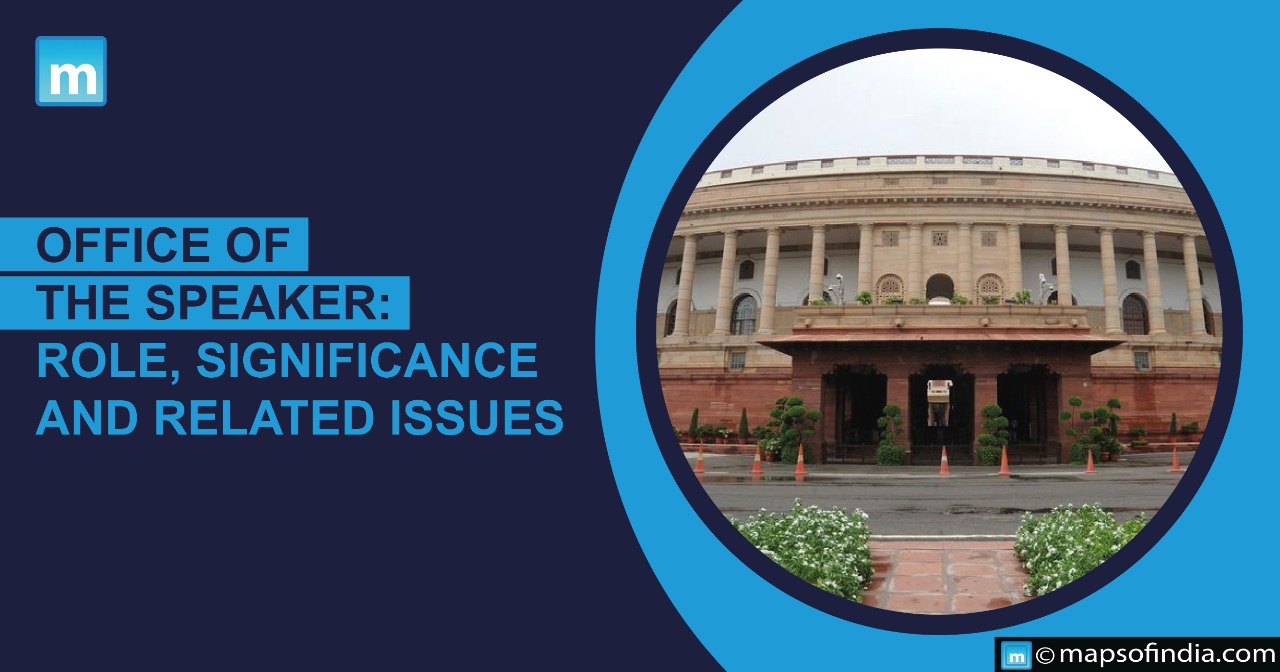
- The Lok Sabha is led by the Speaker.
- He/she is the House's primary spokesperson, and their judgement on all parliamentary affairs is final.
- The Lok Sabha Speaker gets his or her authority from three sources:
- The Indian Constitution.
- Business Conduct and Procedures of the Lok Sabha.
- The Conventions of Parliament.
- The Speaker's principal role is to preserve discipline and decency in the House while conducting business and controlling its activities. He or she has the last say on this subject.
- In the first case, they do not vote.
- In the event of a tie, he or she may cast a casting vote.
- The Speaker presides over a joint session of the two chambers of Parliament. The President convenes a joint sitting to break a standstill between the Lok Sabha and the Rajya Sabha on a bill.
- The Speaker symbolises the House's overall power, whilst parliament members represent particular constituencies.
- The Speaker's office represents the House's prestige, honour, and authority over which they preside.
- The Speaker is regarded as the primary defender of parliamentary democracy's traditions.
- The Speaker's activities and actions are scrutinised in the House, and he/she cannot ignore any area of legislative activity.
- The Speaker's Office has been accorded a very high place (Seventh Rank) in India's Warrant of Precedence, alongside the Chief Justice of India and second only to the President, Vice-President, and Prime Minister. He/she is greater in position than all the members of the cabinet combined.
- The Supreme Court has issued many decisions concerning the anti-defection statute. A recurring topic in these judgements is the overtly political behaviour of speakers in various state legislatures.
- Over the previous decade, finding an objective and independent Speaker has been difficult.
- By remaining an active member of the ruling party, the Speaker avoids any debate or discussion necessary for the national interest but may embarrass the ruling party.
- The Speaker's partisanship and disinterest in opposition parties' demands frequently lead to persistent interruptions of Parliament by the opponents.
- Indeed, a speaker who remains a ruling party member is analogous to an umpire selected by the attacking team.
- The constant interruption of Parliament not only harms the House's reputation but also undermines the basic duty of any legislature, i.e., the obligation to establish laws for the excellent administration of the country after serious discussion and deliberation.