 Demonetization might have targeted black money and fake currency circulation but its biggest impact is being seen in the shift towards the digital economy, which will emerge as India’s biggest mid- to long-term gain.
Companies in the digital money space had an uphill task of trying to convince two of the biggest stakeholders – consumers, and retail and service outlets, to convert to a cashless economy.
After humble beginnings, companies like PayTM, Mobikwik, Freecharge, Airtel Money, etc., have had to contend with a reticent market where the old system of cash payments was difficult to give up.
Narendra Modi's surgical strike on black money on November 8, 2016, changed all that. The country woke up to cash denial and cash shortage that inadvertently pushed them to seek out e-Wallet solutions. Increasing in popularity and for good reason, the need could not have come at a better time for digital money service providers like Paytm, Freecharge, PayU, Mobikwik and many others.
The revolution has begun and the end game could well see India surpass developed nations to emerge as one of the largest cashless economies.
Demonetization might have targeted black money and fake currency circulation but its biggest impact is being seen in the shift towards the digital economy, which will emerge as India’s biggest mid- to long-term gain.
Companies in the digital money space had an uphill task of trying to convince two of the biggest stakeholders – consumers, and retail and service outlets, to convert to a cashless economy.
After humble beginnings, companies like PayTM, Mobikwik, Freecharge, Airtel Money, etc., have had to contend with a reticent market where the old system of cash payments was difficult to give up.
Narendra Modi's surgical strike on black money on November 8, 2016, changed all that. The country woke up to cash denial and cash shortage that inadvertently pushed them to seek out e-Wallet solutions. Increasing in popularity and for good reason, the need could not have come at a better time for digital money service providers like Paytm, Freecharge, PayU, Mobikwik and many others.
The revolution has begun and the end game could well see India surpass developed nations to emerge as one of the largest cashless economies.
So have you made your switch to the e-Wallet?
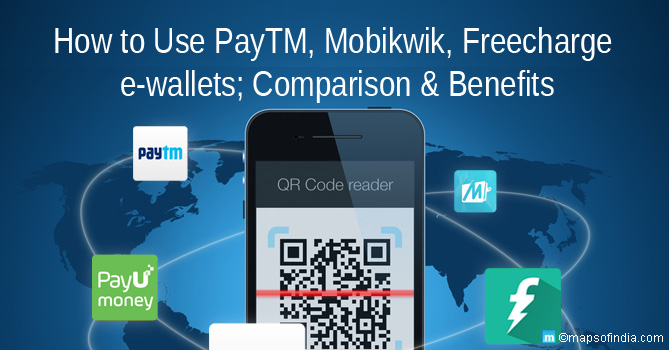
As a consumer who needs to pay for services with an amount as small as Rs 5, the sheer convenience of not worrying about change is a boon. On the other side, not having to carry large amounts of cash to pay for higher value goods or services is a major benefit especially with increasing incidents of crime. Yes, these benefits of e-Wallets will make you eager to have one with you! In case you have still not registered for an e-Wallet as yet, let it be known that it is extremely easy to adopt. Just download the app of the preferred service provider and you are good to go! All it takes to make a payment is to scan a shopkeeper’s QR code, choose the amount to be paid and click. The payment is instant, safe and recorded for both the buyer and the seller. To transfer or receive money into your e-Wallet, both sender and receiver must have the app downloaded. One just enters the mobile number and amount and money is instantly transferred. Have a look on: Can India really become cashless? So, let’s examine some of the best options available for e-wallets that consumers can choose:Paytm
One97 Communications set up Paytm in 2010 mainly as a mobile recharge service, but has since diversified into becoming a full-service digital payments facilitator. Today, it has signed up over 15 lakh merchants and has over 165 million people using the app and the number is rapidly growing. Paytm first caught the public eye when Alibaba and Ratan Tata invested in the company and since then, Paytm has been growing at a brisk pace as has its valuation. The company boasts of maximum merchant sign-ups and includes all kinds of retail establishments, institutions, and service providers like auto, taxi and even street-food vendors. Today Paytm has partner tie-ups with Visa, Mastercard, RuPay, PCI, Safekey and Diners. Paytm can be used to pay for:- Mobile recharge, mobile payment, datacard recharge
- DTH recharge
- Utilities payments: electricity, gas and water
- Groceries; fruits and vegetables from street vendors
- Auto and taxi; app-based cab services
- Metro Card recharge, bus, air and train booking
- All insurance payments, buy gold
- Hotel bookings and restaurants
- Movie bookings
- Pharmacies and hospitals
- Pay school or college fees
- Digital gift cards to be used for shopping
- Money transfers or receipt to and from anyone with a mobile phone and app.