 River Yamuna or Jamuna Ji, as the river is known to millions of people who live on or near the banks of River Yamuna and its tributaries, is considered holy according to the Indian mythology, as the river acts as a lifeline for it’s population in the region.
The river originates from Yamunotri Glaciers in the Himalayas and flows downward through the states Uttrakhand, Uttar Pradesh, Himachal Pradesh, Haryana, entire Delhi, Rajasthan, and Madhya Pradesh, while the river is used for both abstractive and in-stream purposes to cater to the basic needs of the population residing along with the river.
Problem of river pollution in India
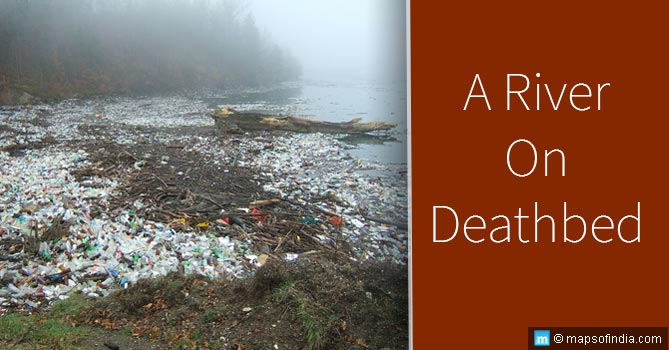
River pollution in India is becoming a major environmental hazard, as most of the river in India are facing challenges of overpopulation, untreated or partially treated domestic and industrial waste-waters, and over-exploitation of the rivers has contributed majorly towards the large scale degradation of Indian river system. Yamuna’s condition is the severest, as the river is on the verge of being biologically dead if stringent steps are not taken within due time. The state of Delhi is the major contributor to the increasing pollution levels in River Yamuna, followed by the Agra and Mathura respectively. The Delhi stretch of River Yamuna, i.e., approximately 22 Kms is the most polluted portion of the river and it has lot to do with the increasing encroachment on the banks of river Yamuna in Delhi, as overpopulation in Delhi has resulted in the establishment of slum clusters on the banks of Yamuna. The condition of river is deteriorating at a brisk rate, with the aquatic ecosystem being the worst hit as the water pollution level in Yamuna river is increasing at an alarming rate, thus putting the whole ecosystem in danger of being damaged to an extent were it will become irreparable.Influence River Yamuna
River Yamuna can be attributed with establishment of kingdoms in Delhi from mythological city of Indraprastha to being the capital of Bahadur Shah Zafar, the last Mughal Emperor. Delhi’s geographical location and river Yamuna’s riverine routes were of major significance to kings, as the river acted as an important trade route for the empires and the river catered to the daily needs of the kingdom.
Government’s role
In 1993, Government of India launched Yamuna Action Plan in collaboration with the Government of Japan which sanctioned a loan in 1990 to implement the first phase of Yamuna Action Plan. Phase I saw the government focusing on develop the infrastructure on the river banks and construction of pumping stations, STPs, low cost toilet complex, crematorium, and plantation along the banks of Yamuna. The second phase of the Yamuna Action Plan started in 2004, saw work being done on 22 km Delhi stretch of the river and the Phase II of Yamuna Acton Plan was completed in 2008. Although the Government of India has invested heavily on Yamuna Action Plan since 1990s, but the situation of river Yamuna has gone onto deteriorate even further. While Prime Minister Narendra Modi has promised to work towards cleaning river Yamuna, as he plans to restore the purity of Yamuna and develop world-class river banks. The Delhi government has also come up with a fresh plan to clean the river, by not allowing any sewage to flow into the river while suggesting to build a canal parallel to river Yamuna from Wazirabad to Okhla, so that the untreated sewage can be discharged into the canal instead of flowing into the river. The Delhi is planning to cooperate with Haryana government as the river requires fresh water to sustain its aquatic ecosystem and requires urgent release of water from the Hathnikund Barrage. The plan forwarded by Delhi Government has received praise from the Central Government as the Modi Government is reviewing the possibilities of the plan and the investment requires to make this plan a success.Role of Citizens
Citizens of the country play an important role in the development of the country to ensure a better and safe environment for not only the present generation but for the future generations, a future where the children can play and breathe in fresh air, a future with safe drinking water without paying for it, and a future where they don’t have to worry about catastrophic disasters. Citizens play an active role in the functioning of democracy, as they can influence the policy-making decision of the government, while the government plays a role of implementing policies and make the citizens aware of their responsibilities in the successful implementation of the policy. People need to cooperate with the government and follow the guidelines of the government in order to have a clean and safe Yamuna.