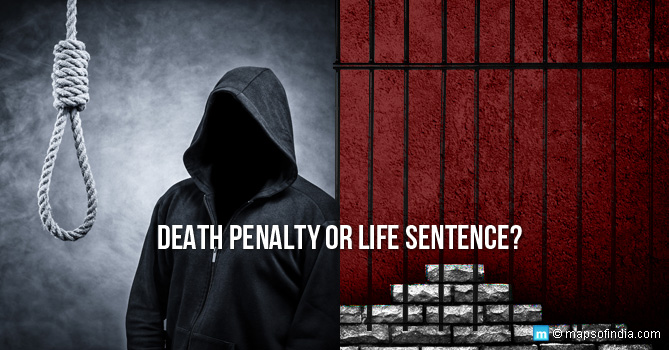
 This one has India divided right down the middle. The debate on whether to abolish the death penalty or not, has been raging in India and in several other countries for decades, as each nation tries to address the issue through the lens of fair justice, human rights, ethics, morality and social well-being. There have been no easy answers and societies in most countries remain polarised on the subject.
The road to Yakub Memon’s execution has deeply divided Indian society, between those who were supporting his execution and those who believed executing him would only make us a society looking for retribution, while having no impact in the fight against terror.
The 1993 serial blasts in Mumbai was in response to the demolition of the Babri Masjid and was planned and executed by local gangster Dawood Ibrahim and actively supported by his associate Tiger Memon, Yakub’s brother. Dawood Ibrahim along with members of his gang and Tiger Memon, still remain at large and are believed to be living in Pakistan, under covert protection of the Pakistani Intelligence Service, ISI.
Yakub Memon, a chartered accountant by profession, was suspected of being involved in money laundering activity for his brother through front companies, prior to the Mumbai blast. However, his role, in the context of the death penalty, has been strongly contested by his family, his lawyers and subsequently, members of civil society including several eminent lawyers, all of whom mounted a vociferous defence in favour of commuting his death sentence to life.
So much so, that even after several years of trial and appeals, and his mercy petition being finally turned down by the President of India, his lawyers along with several other senior lawyers like Prashant Bhushan, approached the Supreme Court as late as 0300 hrs, just hours before his execution on the 30th of July, to appeal for granting him an extension of 14 days, so that his defence team could mount another last minute appeal for commuting his death sentence to life. Through all this, Indian society at large, remained divided and are still trying to come to terms with their own views on the subject.
A large section of people in the country, which included families of 257 victims who lost their lives and 713 others who were injured, remained bitter at the delay in carrying out the execution and wanted some sense of closure on a long but tragic chapter in their lives. As expected, various politicians came to a last minute defence to further polarise the debate and give the outcome a communal tone. The Supreme Court on its part remained strictly neutral and followed legal guidelines and procedure.
This was one hot potato that no political party would have liked to touch, as there is a political price to pay, irrespective of which side of the fence they were sitting on. But as it so happened, the final moment for taking the call came during the term of the present government. As per protocol, the Home Ministry took the final call to advise the President of India, on behalf of the Council of Ministers, to reject the last and final petition, thereby sealing Yakub’s fate on the evening of 29 July 2015. He was hanged in the early hours of 30 July, which also happened to be his birthday.
The message that went out to the nation, and the world at large, was that the government was not willing to take a soft line on terror, and law would take its own course, irrespective of who was involved. That said, the debate now assumes greater significance in light of the fact that the United Nations, as also Amnesty International, have appealed to India to review its existing laws on the subject and abolish the death penalty.
Let’s take a look at what position various stakeholders have taken on the subject.
This one has India divided right down the middle. The debate on whether to abolish the death penalty or not, has been raging in India and in several other countries for decades, as each nation tries to address the issue through the lens of fair justice, human rights, ethics, morality and social well-being. There have been no easy answers and societies in most countries remain polarised on the subject.
The road to Yakub Memon’s execution has deeply divided Indian society, between those who were supporting his execution and those who believed executing him would only make us a society looking for retribution, while having no impact in the fight against terror.
The 1993 serial blasts in Mumbai was in response to the demolition of the Babri Masjid and was planned and executed by local gangster Dawood Ibrahim and actively supported by his associate Tiger Memon, Yakub’s brother. Dawood Ibrahim along with members of his gang and Tiger Memon, still remain at large and are believed to be living in Pakistan, under covert protection of the Pakistani Intelligence Service, ISI.
Yakub Memon, a chartered accountant by profession, was suspected of being involved in money laundering activity for his brother through front companies, prior to the Mumbai blast. However, his role, in the context of the death penalty, has been strongly contested by his family, his lawyers and subsequently, members of civil society including several eminent lawyers, all of whom mounted a vociferous defence in favour of commuting his death sentence to life.
So much so, that even after several years of trial and appeals, and his mercy petition being finally turned down by the President of India, his lawyers along with several other senior lawyers like Prashant Bhushan, approached the Supreme Court as late as 0300 hrs, just hours before his execution on the 30th of July, to appeal for granting him an extension of 14 days, so that his defence team could mount another last minute appeal for commuting his death sentence to life. Through all this, Indian society at large, remained divided and are still trying to come to terms with their own views on the subject.
A large section of people in the country, which included families of 257 victims who lost their lives and 713 others who were injured, remained bitter at the delay in carrying out the execution and wanted some sense of closure on a long but tragic chapter in their lives. As expected, various politicians came to a last minute defence to further polarise the debate and give the outcome a communal tone. The Supreme Court on its part remained strictly neutral and followed legal guidelines and procedure.
This was one hot potato that no political party would have liked to touch, as there is a political price to pay, irrespective of which side of the fence they were sitting on. But as it so happened, the final moment for taking the call came during the term of the present government. As per protocol, the Home Ministry took the final call to advise the President of India, on behalf of the Council of Ministers, to reject the last and final petition, thereby sealing Yakub’s fate on the evening of 29 July 2015. He was hanged in the early hours of 30 July, which also happened to be his birthday.
The message that went out to the nation, and the world at large, was that the government was not willing to take a soft line on terror, and law would take its own course, irrespective of who was involved. That said, the debate now assumes greater significance in light of the fact that the United Nations, as also Amnesty International, have appealed to India to review its existing laws on the subject and abolish the death penalty.
Let’s take a look at what position various stakeholders have taken on the subject.
This one has India divided right down the middle. The debate on whether to abolish the death penalty or not, has been raging in India and in several other countries for decades, as each nation tries to address the issue through the lens of fair justice, human rights, ethics, morality and social well-being. There have been no easy answers and societies in most countries remain polarised on the subject.
The road to Yakub Memon’s execution has deeply divided Indian society, between those who were supporting his execution and those who believed executing him would only make us a society looking for retribution, while having no impact in the fight against terror.
The 1993 serial blasts in Mumbai was in response to the demolition of the Babri Masjid and was planned and executed by local gangster Dawood Ibrahim and actively supported by his associate Tiger Memon, Yakub’s brother. Dawood Ibrahim along with members of his gang and Tiger Memon, still remain at large and are believed to be living in Pakistan, under covert protection of the Pakistani Intelligence Service, ISI.
Yakub Memon, a chartered accountant by profession, was suspected of being involved in money laundering activity for his brother through front companies, prior to the Mumbai blast. However, his role, in the context of the death penalty, has been strongly contested by his family, his lawyers and subsequently, members of civil society including several eminent lawyers, all of whom mounted a vociferous defence in favour of commuting his death sentence to life.
So much so, that even after several years of trial and appeals, and his mercy petition being finally turned down by the President of India, his lawyers along with several other senior lawyers like Prashant Bhushan, approached the Supreme Court as late as 0300 hrs, just hours before his execution on the 30th of July, to appeal for granting him an extension of 14 days, so that his defence team could mount another last minute appeal for commuting his death sentence to life. Through all this, Indian society at large, remained divided and are still trying to come to terms with their own views on the subject.
A large section of people in the country, which included families of 257 victims who lost their lives and 713 others who were injured, remained bitter at the delay in carrying out the execution and wanted some sense of closure on a long but tragic chapter in their lives. As expected, various politicians came to a last minute defence to further polarise the debate and give the outcome a communal tone. The Supreme Court on its part remained strictly neutral and followed legal guidelines and procedure.
This was one hot potato that no political party would have liked to touch, as there is a political price to pay, irrespective of which side of the fence they were sitting on. But as it so happened, the final moment for taking the call came during the term of the present government. As per protocol, the Home Ministry took the final call to advise the President of India, on behalf of the Council of Ministers, to reject the last and final petition, thereby sealing Yakub’s fate on the evening of 29 July 2015. He was hanged in the early hours of 30 July, which also happened to be his birthday.
The message that went out to the nation, and the world at large, was that the government was not willing to take a soft line on terror, and law would take its own course, irrespective of who was involved. That said, the debate now assumes greater significance in light of the fact that the United Nations, as also Amnesty International, have appealed to India to review its existing laws on the subject and abolish the death penalty.
Let’s take a look at what position various stakeholders have taken on the subject.
This one has India divided right down the middle. The debate on whether to abolish the death penalty or not, has been raging in India and in several other countries for decades, as each nation tries to address the issue through the lens of fair justice, human rights, ethics, morality and social well-being. There have been no easy answers and societies in most countries remain polarised on the subject.
The road to Yakub Memon’s execution has deeply divided Indian society, between those who were supporting his execution and those who believed executing him would only make us a society looking for retribution, while having no impact in the fight against terror.
The 1993 serial blasts in Mumbai was in response to the demolition of the Babri Masjid and was planned and executed by local gangster Dawood Ibrahim and actively supported by his associate Tiger Memon, Yakub’s brother. Dawood Ibrahim along with members of his gang and Tiger Memon, still remain at large and are believed to be living in Pakistan, under covert protection of the Pakistani Intelligence Service, ISI.
Yakub Memon, a chartered accountant by profession, was suspected of being involved in money laundering activity for his brother through front companies, prior to the Mumbai blast. However, his role, in the context of the death penalty, has been strongly contested by his family, his lawyers and subsequently, members of civil society including several eminent lawyers, all of whom mounted a vociferous defence in favour of commuting his death sentence to life.
So much so, that even after several years of trial and appeals, and his mercy petition being finally turned down by the President of India, his lawyers along with several other senior lawyers like Prashant Bhushan, approached the Supreme Court as late as 0300 hrs, just hours before his execution on the 30th of July, to appeal for granting him an extension of 14 days, so that his defence team could mount another last minute appeal for commuting his death sentence to life. Through all this, Indian society at large, remained divided and are still trying to come to terms with their own views on the subject.
A large section of people in the country, which included families of 257 victims who lost their lives and 713 others who were injured, remained bitter at the delay in carrying out the execution and wanted some sense of closure on a long but tragic chapter in their lives. As expected, various politicians came to a last minute defence to further polarise the debate and give the outcome a communal tone. The Supreme Court on its part remained strictly neutral and followed legal guidelines and procedure.
This was one hot potato that no political party would have liked to touch, as there is a political price to pay, irrespective of which side of the fence they were sitting on. But as it so happened, the final moment for taking the call came during the term of the present government. As per protocol, the Home Ministry took the final call to advise the President of India, on behalf of the Council of Ministers, to reject the last and final petition, thereby sealing Yakub’s fate on the evening of 29 July 2015. He was hanged in the early hours of 30 July, which also happened to be his birthday.
The message that went out to the nation, and the world at large, was that the government was not willing to take a soft line on terror, and law would take its own course, irrespective of who was involved. That said, the debate now assumes greater significance in light of the fact that the United Nations, as also Amnesty International, have appealed to India to review its existing laws on the subject and abolish the death penalty.
Let’s take a look at what position various stakeholders have taken on the subject.