 The BJP-led NDA government is all set to present the Budget for FY 2015-16. All eyes will be on the government for direction on future policy for sustaining growth.
Irrespective of what the Budget highlights or omits, one challenge that will continue to concern the nation is the rising demand for power. The gap between demand and supply of power will determine the extent to which the government will be able to meet its development objective. The key is to not just increase investment and enhance power generation, which is a prime need anyways, but invest in more efficient power distribution and optimize power consumption through use of efficient technology.
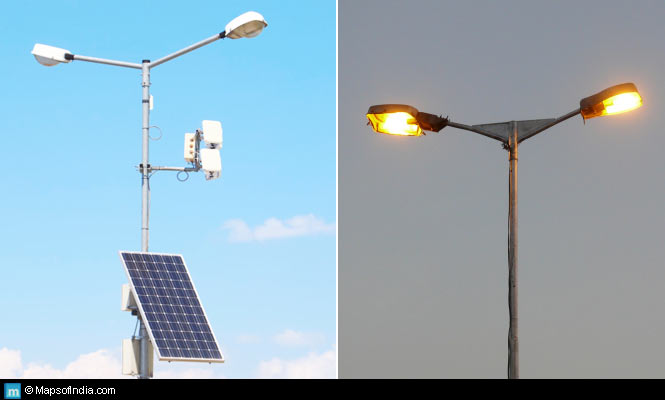
An important component of power consumption worldwide is street lighting. India is no different. Global trends in street lighting show that 18-38% of the total energy bill goes towards street lighting and therefore this is one domain that needs major attention if we look at improving efficiency of power consumption with an objective of saving energy.
India has a total installed capacity of generating 255681.46 MW, as on 31 Dec 2014, as per CEA, Ministry of Power. Of this, Coal based units generate 154170.89 MW, Gas based units - 22971.25 MW, Diesel - 1199.75 MW, Nuclear - 4780 MW, Hydro - 40867.43 MW and Renewable energy -31692.14 MW.
The sector-wise share of installed capacity is: State owned units - 37%, Private units -36% and Central units - 27%.
Under the 12th Plan, the total capacity addition for power generation was 88537 MW, against this, the actual capacity added till December 2014 was 49058. 22 MW. It clearly suggests that the government has no choice but to take up the challenge of improving power distribution and consumption, as earnestly as increasing power generation capacity.
Power tariff and distribution to end consumer is a state subject and therefore the responsibility and initiative for improving power distribution and consumption lies with the state governments and the active utilities in the state. While power tariffs and consumer priorities have been a matter of much debate, the need for implementing power saving measures as a means for reducing energy cost has never been greater.
At the state level, most of the State Electricity Boards are reeling under massive losses on account of a combination of subsidy and under-recoveries. The National Tariff Policy of 2006 stipulates that the State Electricity Regulatory Commission (SERC) fix tariff within +/- 20% of the cost of supply. Unfortunately, most states fail to meet this guideline. As a result, the power sector in most states are in a financial mess.
This proves a major handicap when it comes to investing in more energy efficient power distribution equipment and latest power metering and monitoring systems. The one sector that needs urgent attention is street lighting.
The BJP-led NDA government is all set to present the Budget for FY 2015-16. All eyes will be on the government for direction on future policy for sustaining growth.
Irrespective of what the Budget highlights or omits, one challenge that will continue to concern the nation is the rising demand for power. The gap between demand and supply of power will determine the extent to which the government will be able to meet its development objective. The key is to not just increase investment and enhance power generation, which is a prime need anyways, but invest in more efficient power distribution and optimize power consumption through use of efficient technology.
An important component of power consumption worldwide is street lighting. India is no different. Global trends in street lighting show that 18-38% of the total energy bill goes towards street lighting and therefore this is one domain that needs major attention if we look at improving efficiency of power consumption with an objective of saving energy.
India has a total installed capacity of generating 255681.46 MW, as on 31 Dec 2014, as per CEA, Ministry of Power. Of this, Coal based units generate 154170.89 MW, Gas based units - 22971.25 MW, Diesel - 1199.75 MW, Nuclear - 4780 MW, Hydro - 40867.43 MW and Renewable energy -31692.14 MW.
The sector-wise share of installed capacity is: State owned units - 37%, Private units -36% and Central units - 27%.
Under the 12th Plan, the total capacity addition for power generation was 88537 MW, against this, the actual capacity added till December 2014 was 49058. 22 MW. It clearly suggests that the government has no choice but to take up the challenge of improving power distribution and consumption, as earnestly as increasing power generation capacity.
Power tariff and distribution to end consumer is a state subject and therefore the responsibility and initiative for improving power distribution and consumption lies with the state governments and the active utilities in the state. While power tariffs and consumer priorities have been a matter of much debate, the need for implementing power saving measures as a means for reducing energy cost has never been greater.
At the state level, most of the State Electricity Boards are reeling under massive losses on account of a combination of subsidy and under-recoveries. The National Tariff Policy of 2006 stipulates that the State Electricity Regulatory Commission (SERC) fix tariff within +/- 20% of the cost of supply. Unfortunately, most states fail to meet this guideline. As a result, the power sector in most states are in a financial mess.
This proves a major handicap when it comes to investing in more energy efficient power distribution equipment and latest power metering and monitoring systems. The one sector that needs urgent attention is street lighting.
The BJP-led NDA government is all set to present the Budget for FY 2015-16. All eyes will be on the government for direction on future policy for sustaining growth.
Irrespective of what the Budget highlights or omits, one challenge that will continue to concern the nation is the rising demand for power. The gap between demand and supply of power will determine the extent to which the government will be able to meet its development objective. The key is to not just increase investment and enhance power generation, which is a prime need anyways, but invest in more efficient power distribution and optimize power consumption through use of efficient technology.
An important component of power consumption worldwide is street lighting. India is no different. Global trends in street lighting show that 18-38% of the total energy bill goes towards street lighting and therefore this is one domain that needs major attention if we look at improving efficiency of power consumption with an objective of saving energy.
India has a total installed capacity of generating 255681.46 MW, as on 31 Dec 2014, as per CEA, Ministry of Power. Of this, Coal based units generate 154170.89 MW, Gas based units - 22971.25 MW, Diesel - 1199.75 MW, Nuclear - 4780 MW, Hydro - 40867.43 MW and Renewable energy -31692.14 MW.
The sector-wise share of installed capacity is: State owned units - 37%, Private units -36% and Central units - 27%.
Under the 12th Plan, the total capacity addition for power generation was 88537 MW, against this, the actual capacity added till December 2014 was 49058. 22 MW. It clearly suggests that the government has no choice but to take up the challenge of improving power distribution and consumption, as earnestly as increasing power generation capacity.
Power tariff and distribution to end consumer is a state subject and therefore the responsibility and initiative for improving power distribution and consumption lies with the state governments and the active utilities in the state. While power tariffs and consumer priorities have been a matter of much debate, the need for implementing power saving measures as a means for reducing energy cost has never been greater.
At the state level, most of the State Electricity Boards are reeling under massive losses on account of a combination of subsidy and under-recoveries. The National Tariff Policy of 2006 stipulates that the State Electricity Regulatory Commission (SERC) fix tariff within +/- 20% of the cost of supply. Unfortunately, most states fail to meet this guideline. As a result, the power sector in most states are in a financial mess.
This proves a major handicap when it comes to investing in more energy efficient power distribution equipment and latest power metering and monitoring systems. The one sector that needs urgent attention is street lighting.
The BJP-led NDA government is all set to present the Budget for FY 2015-16. All eyes will be on the government for direction on future policy for sustaining growth.
Irrespective of what the Budget highlights or omits, one challenge that will continue to concern the nation is the rising demand for power. The gap between demand and supply of power will determine the extent to which the government will be able to meet its development objective. The key is to not just increase investment and enhance power generation, which is a prime need anyways, but invest in more efficient power distribution and optimize power consumption through use of efficient technology.
An important component of power consumption worldwide is street lighting. India is no different. Global trends in street lighting show that 18-38% of the total energy bill goes towards street lighting and therefore this is one domain that needs major attention if we look at improving efficiency of power consumption with an objective of saving energy.
India has a total installed capacity of generating 255681.46 MW, as on 31 Dec 2014, as per CEA, Ministry of Power. Of this, Coal based units generate 154170.89 MW, Gas based units - 22971.25 MW, Diesel - 1199.75 MW, Nuclear - 4780 MW, Hydro - 40867.43 MW and Renewable energy -31692.14 MW.
The sector-wise share of installed capacity is: State owned units - 37%, Private units -36% and Central units - 27%.
Under the 12th Plan, the total capacity addition for power generation was 88537 MW, against this, the actual capacity added till December 2014 was 49058. 22 MW. It clearly suggests that the government has no choice but to take up the challenge of improving power distribution and consumption, as earnestly as increasing power generation capacity.
Power tariff and distribution to end consumer is a state subject and therefore the responsibility and initiative for improving power distribution and consumption lies with the state governments and the active utilities in the state. While power tariffs and consumer priorities have been a matter of much debate, the need for implementing power saving measures as a means for reducing energy cost has never been greater.
At the state level, most of the State Electricity Boards are reeling under massive losses on account of a combination of subsidy and under-recoveries. The National Tariff Policy of 2006 stipulates that the State Electricity Regulatory Commission (SERC) fix tariff within +/- 20% of the cost of supply. Unfortunately, most states fail to meet this guideline. As a result, the power sector in most states are in a financial mess.
This proves a major handicap when it comes to investing in more energy efficient power distribution equipment and latest power metering and monitoring systems. The one sector that needs urgent attention is street lighting.