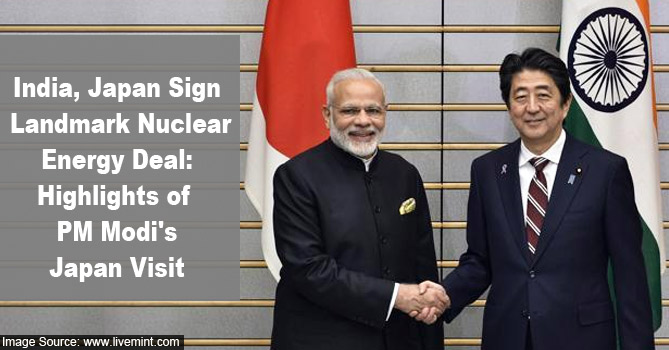
 On 10th November India and Japan signed a civil nuclear agreement that is supposed to be a landmark of its kind between both the countries. It is expected that this agreement would improve bilateral relations between both the countries by leaps and bounds. The deal was signed in Tokyo during a yearly bilateral summit by Narendra Modi and Shinzo Abe, the Prime Minister of Japan. The Indian Premier is presently on his second visit to Japan in two years and the trip is expected to last three years. It is expected that when this deal is exercised India will be able to import nuclear technology and reactors from Japan and that will give it significant advantage compared to its neighbouring countries in terms of usage of civil nuclear energy.
On 10th November India and Japan signed a civil nuclear agreement that is supposed to be a landmark of its kind between both the countries. It is expected that this agreement would improve bilateral relations between both the countries by leaps and bounds. The deal was signed in Tokyo during a yearly bilateral summit by Narendra Modi and Shinzo Abe, the Prime Minister of Japan. The Indian Premier is presently on his second visit to Japan in two years and the trip is expected to last three years. It is expected that when this deal is exercised India will be able to import nuclear technology and reactors from Japan and that will give it significant advantage compared to its neighbouring countries in terms of usage of civil nuclear energy.
On 10th November India and Japan signed a civil nuclear agreement that is supposed to be a landmark of its kind between both the countries. It is expected that this agreement would improve bilateral relations between both the countries by leaps and bounds. The deal was signed in Tokyo during a yearly bilateral summit by Narendra Modi and Shinzo Abe, the Prime Minister of Japan. The Indian Premier is presently on his second visit to Japan in two years and the trip is expected to last three years. It is expected that when this deal is exercised India will be able to import nuclear technology and reactors from Japan and that will give it significant advantage compared to its neighbouring countries in terms of usage of civil nuclear energy.