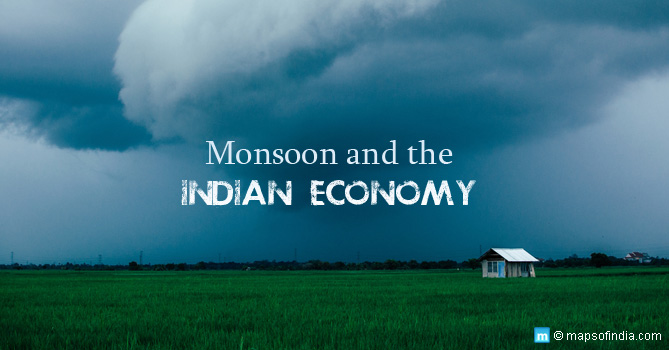
 Agriculture contributes about 16% to India’s GDP and employs around 50% of the labour force. With a population of over 1.2 billion, agricultural production and its contribution to the economy becomes critical.
The problem is that more than half of India's farmers still depend on rainfall for meeting their irrigation needs. While the share of irrigated land has increased significantly over the years, deficient rainfall in most years has resulted in water tables dropping significantly, thereby depleting the availability of groundwater in areas where tubewells have been laid.
The situation has become even more critical due to poor rainfall over the last two years. This has resulted in severe drought and drought-like situation in parts of Telangana, Andhra Pradesh, Karnataka as well as the Marathwada and Vidarbha regions in Maharashtra.
India's rural economy is highly dependent on the monsoons and a good monsoon has a direct impact on rural incomes, which in turn increases rural spending leading to an overall GDP growth.
This year the Indian Meteorological Department has announced that monsoon rain is expected to be 106% of the long period average. This is a positive news for the Indian economy, and especially rural India, given its high dependence on rainfall. If this happens, there is every likelihood that farm incomes will see a 20% increase in FY16-17. This in turn will trigger demand for agri-related goods and services, consumer durables and textiles.
It’s not just rural India that will be impacted by good monsoons but the overall economy. Industries like fertilizers, food processing, two and four wheeler automobiles, agro machinery and tools, financial services including insurance, are all likely to get a boost.
Agriculture contributes about 16% to India’s GDP and employs around 50% of the labour force. With a population of over 1.2 billion, agricultural production and its contribution to the economy becomes critical.
The problem is that more than half of India's farmers still depend on rainfall for meeting their irrigation needs. While the share of irrigated land has increased significantly over the years, deficient rainfall in most years has resulted in water tables dropping significantly, thereby depleting the availability of groundwater in areas where tubewells have been laid.
The situation has become even more critical due to poor rainfall over the last two years. This has resulted in severe drought and drought-like situation in parts of Telangana, Andhra Pradesh, Karnataka as well as the Marathwada and Vidarbha regions in Maharashtra.
India's rural economy is highly dependent on the monsoons and a good monsoon has a direct impact on rural incomes, which in turn increases rural spending leading to an overall GDP growth.
This year the Indian Meteorological Department has announced that monsoon rain is expected to be 106% of the long period average. This is a positive news for the Indian economy, and especially rural India, given its high dependence on rainfall. If this happens, there is every likelihood that farm incomes will see a 20% increase in FY16-17. This in turn will trigger demand for agri-related goods and services, consumer durables and textiles.
It’s not just rural India that will be impacted by good monsoons but the overall economy. Industries like fertilizers, food processing, two and four wheeler automobiles, agro machinery and tools, financial services including insurance, are all likely to get a boost.
Agriculture contributes about 16% to India’s GDP and employs around 50% of the labour force. With a population of over 1.2 billion, agricultural production and its contribution to the economy becomes critical.
The problem is that more than half of India's farmers still depend on rainfall for meeting their irrigation needs. While the share of irrigated land has increased significantly over the years, deficient rainfall in most years has resulted in water tables dropping significantly, thereby depleting the availability of groundwater in areas where tubewells have been laid.
The situation has become even more critical due to poor rainfall over the last two years. This has resulted in severe drought and drought-like situation in parts of Telangana, Andhra Pradesh, Karnataka as well as the Marathwada and Vidarbha regions in Maharashtra.
India's rural economy is highly dependent on the monsoons and a good monsoon has a direct impact on rural incomes, which in turn increases rural spending leading to an overall GDP growth.
This year the Indian Meteorological Department has announced that monsoon rain is expected to be 106% of the long period average. This is a positive news for the Indian economy, and especially rural India, given its high dependence on rainfall. If this happens, there is every likelihood that farm incomes will see a 20% increase in FY16-17. This in turn will trigger demand for agri-related goods and services, consumer durables and textiles.
It’s not just rural India that will be impacted by good monsoons but the overall economy. Industries like fertilizers, food processing, two and four wheeler automobiles, agro machinery and tools, financial services including insurance, are all likely to get a boost.
Agriculture contributes about 16% to India’s GDP and employs around 50% of the labour force. With a population of over 1.2 billion, agricultural production and its contribution to the economy becomes critical.
The problem is that more than half of India's farmers still depend on rainfall for meeting their irrigation needs. While the share of irrigated land has increased significantly over the years, deficient rainfall in most years has resulted in water tables dropping significantly, thereby depleting the availability of groundwater in areas where tubewells have been laid.
The situation has become even more critical due to poor rainfall over the last two years. This has resulted in severe drought and drought-like situation in parts of Telangana, Andhra Pradesh, Karnataka as well as the Marathwada and Vidarbha regions in Maharashtra.
India's rural economy is highly dependent on the monsoons and a good monsoon has a direct impact on rural incomes, which in turn increases rural spending leading to an overall GDP growth.
This year the Indian Meteorological Department has announced that monsoon rain is expected to be 106% of the long period average. This is a positive news for the Indian economy, and especially rural India, given its high dependence on rainfall. If this happens, there is every likelihood that farm incomes will see a 20% increase in FY16-17. This in turn will trigger demand for agri-related goods and services, consumer durables and textiles.
It’s not just rural India that will be impacted by good monsoons but the overall economy. Industries like fertilizers, food processing, two and four wheeler automobiles, agro machinery and tools, financial services including insurance, are all likely to get a boost.