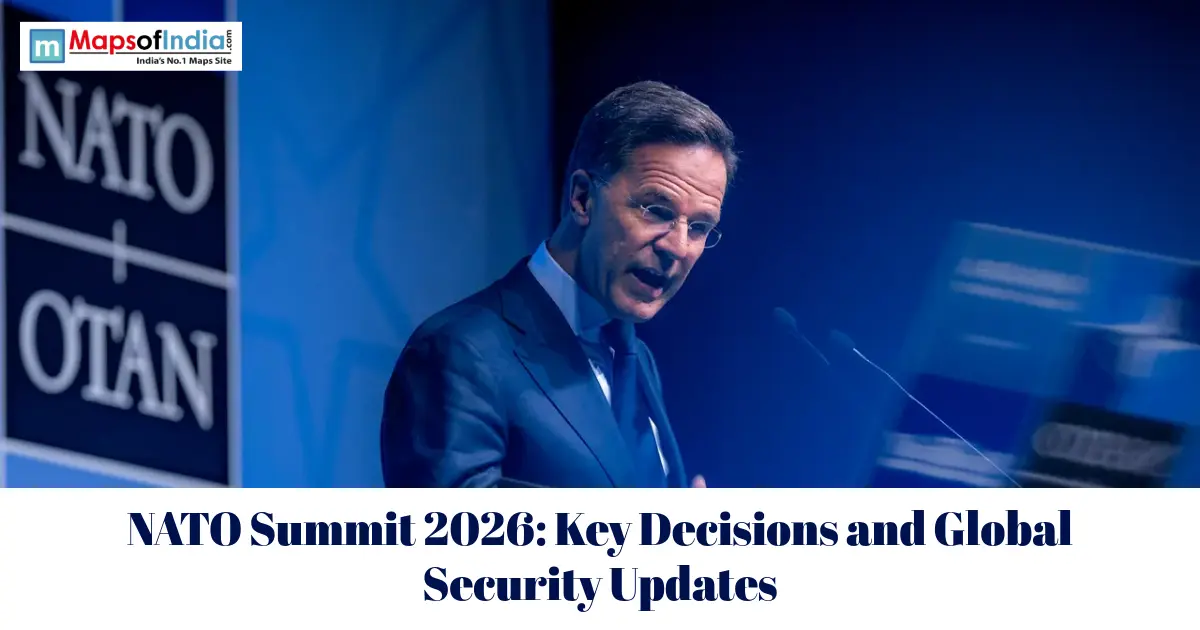
The 2026 NATO Summit in Ankara was an important event for NATO, where the leaders of the 32 member nations, as well as Ukraine, Japan, South Korea, Australia, and New Zealand, discussed various issues, including defence spending, Ukraine and industrial production. NATO allies took up the ball after the successful NATO Summit in 2025, when they had committed to raising their defence spending to 5% of GDP, by supporting Ukraine, enhancing and expanding its defence forces and planning for the future. Here you'll find analysis of the pivotal decisions on global security, statements from world leaders and what is likely to happen next with the alliance.
What was the 2026 NATO Summit?
The NATO Summit 2026 was held in Ankara, Turkey, on July 7-8, 2026. It was attended by the leaders of all 32 NATO member states, as well as invited partners, such as Ukraine, Japan, South Korea, Australia, and New Zealand. The gathering took place in the birthplace of modern NATO in Ankara and was a message of solidarity to the world since Turkey and some NATO members have already been at odds about regional issues.
The 2026 meeting was particularly poignant for the alliance as it was the time to review the 5% GDP spending commitment made at the Hague Summit in 2025. Leaders of allied countries, too, had to make plans for Ukraine's future, advance discussions on defence industry development and review burden sharing with the United States, which has been a constant issue with NATO.
Key Decisions from the NATO Summit 2026
Defense Spending Commitments
Defending 5% of GDP was reaffirmed by world leaders in the 2026 NATO Summit. In particular, Polish PM Morawiecki, Baltic leaders and Kyriakos Mitsotakis of Greece have promised to surpass the 5% mark. U.S. President Donald Trump and Chancellor Angela Merkel agreed to increase Germany's defence budget, and the southern European allies agreed to raise their defence budgets each year. Last but not least, NATO's leaders agreed on credible deterrence.
Ukraine Support Package
During the 2026 NATO Summit, the leaders of the alliance committed to supplying Ukraine with fresh funding and military supplies. Among other things, they have accepted payment of a 70 billion euro aid package, dubbed historic. The funds will be spent on ammunition, air defence systems and military training. Besides, the leaders agreed to accept Ukraine as a member of NATO in the future. In particular, President Biden said it is long overdue for Ukraine to be a member of NATO.
Defence Industrial Production
Leaders of the NATO countries have discussed the activities of the new NATO Summit Defence Industry Forum, established at the 2025 NATO Summit in the Hague. In particular, they have given their support for an increase in the production of strategic defence equipment in member states to lessen their reliance on friendly suppliers.
Alliance Cohesion & US-Europe Relations
The outcome of the NATO Summit in Ankara was a mixed bag, but leaders were able to forge a compromise and reaffirmed their stance on collective defence.
Global Security Implications
The NATO leaders have promised further to enhance the alliance's military capability, both in Europe and the Indo-Pacific.
For the Russian-Ukrainian war, the NATO allies declared their willingness to back Ukraine "First and Foremost" economically and militarily. That could make for Kyiv to resist Moscow's pressure and also lead to peace, for Ukraine, the leaders claimed. Still, they were equally certain that a military resolution would hardly be feasible, as both parties were hesitant. At the same time, it was reaffirmed by the top officials that applying economic and military pressure on Moscow would contribute to getting Ukraine a good compromise.
The U.S., the UK and some European nations, meanwhile, have voiced worries over rising tensions with Iran. In particular, the leaders have said that they were worried that Tehran was preparing to attack in the Middle East and threaten maritime security. Thus, they have requested more military readiness and presence to deal with escalations. The situation in the Middle East could have grave repercussions for European security.
Finally, the 2026 NATO Summit also focused on the U.S.-China geopolitical competition, in particular on the situation in the Arctic and the Far East. In particular, allied leaders have expressed concerns about Beijing’s growing influence in the region, as well as about the growing strategic importance of Greenland. Melting poles have created new shipping routes and access to natural resources.
Reactions and Statements from World Leaders
Most of the world leaders' remarks were guardedly optimistic. U.S. President Donald Trump described the NATO Summit (2026) as “very productive” in his remarks. He also restated his call for burden-sharing reforms in order to make sure the European allies spend more on defence. Specifically, several NATO allies have made “serious commitments” to higher defence spending, he said.
NATO Secretary General Mark Rutte stated that the alliance had made “a statement of unity and resolve” as well as secured additional financial commitments and military spending. He also mentioned the role of friendly forces in Ukraine. In turn, Ukrainian President Volodymyr Zelensky has welcomed the financial and military assistance of the NATO allies.
NATO's future has become more sunny for Mark Rutte, who hopes the defence industry could help accelerate the production of the necessary weapons and equipment. The European allies also emphasised that NATO's defence budget would enable them to decrease their dependence on the United States and strengthen collective security. In particular, European Council President António Costa said the summit's result was good for making "strategic autonomy" and "keeping the transatlantic alliance intact.
The official documents from NATO.int and Reuters indicate that most of the political leaders had a positive outlook, though a rather guarded one, at the summit.
How This Compares to Previous NATO Summits
Aspect | Hague Summit 2025 | Ankara Summit 2026 |
| Defence Spending Target | 5% GDP pledge announced | Progress review and commitments |
| Ukraine Support | Initial long-term package | €70 billion enhanced package |
| Focus | Setting new spending goals | Implementation and industrial base |
| Alliance Cohesion | Addressing divisions | Stronger unity on key issues |
The 2026 summit moved from setting ambitious targets to focusing on delivery and practical cooperation.
What Happens Next?
The leaders of the NATO member states have agreed to a comprehensive plan of action to implement the objectives agreed at the 2026 Ankara Summit. In particular, there will be an annual review of defence spending by NATO defence ministers. The next NATO Summit will be held in 2027. Moreover, allied states will have to submit detailed reports on their commitments by early 2027. The results of the NATO 2026 Summit will reverberate not only on the alliance's future but also on global security and strategic stability.